
International Traveler Guidelines
Welcome to the roof of the world. The Indian Himalayas are not a standard touring destination; they are a high-altitude, logistically complex environment.
While the standard itineraries on our website are curated around the specific time constraints of domestic tourists, international travelers often require a different pace and permits to visit border areas and sensitive locations. If you are piloting a motorcycle, a 4×4, or exploring as a passenger, we specialize in building bespoke itineraries tailored to your schedule, riding experience, and acclimatization needs.
Plan Your Bespoke Expedition To build a custom itinerary designed for international requirements, reach out to our team:
Email: wolfpackridingadventure@gmail.com
WhatsApp / Call: +91 7876103173 (Please include the +91 country code)
Below is your operational manual for safely entering and moving through the high-altitude border regions of Ladakh, Spiti, and Zanskar.
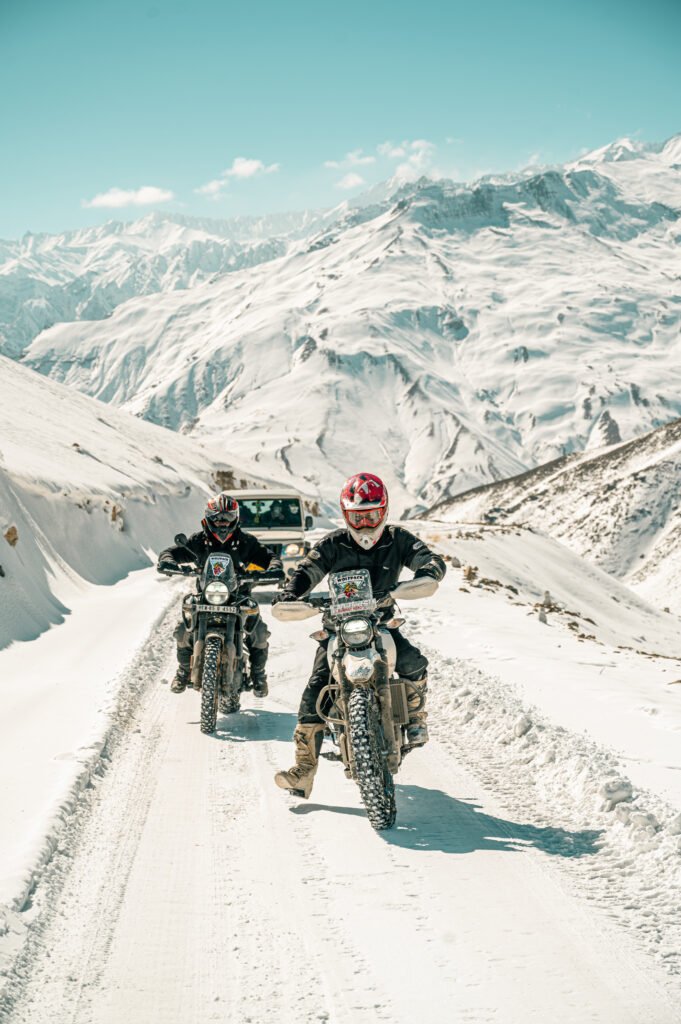
Essential Documentation & Permits
- To enter and navigate India's remote border regions, the following are non-negotiable:
- International Driving Permit (IDP) : You must carry a valid IDP alongside your original home country license. Indian authorities and checkpoints will not accept a foreign license on its own.
- Protected Area Permits (PAP) : Ladakh: Required for Nubra, Pangong, and Hanle. Unlike Indian nationals who need an Inner Line Permit (ILP), foreign nationals are mandated by the Ministry of Home Affairs to carry a Protected Area Permit (PAP). The "Group of Two" Rule: PAPs are never issued to solo foreign travelers. You must apply in a minimum group of two. The Agency Requirement: Foreigners cannot apply for a PAP directly. As a registered local operator, Wolfpack handles all PAP group-filing and matching requirements on your behalf.
- Spiti : Required for the high-security zone between Jangi and Kaza. This must be obtained in person at Shimla, Reckong Peo, Kaza(if you are approaching from Kaza to Kinnaur).
- The Visa: Apply for an e-Tourist Visa at least 10 days prior to departure. Ensure your passport has a minimum of 6 months of validity remaining and at least two blank pages.
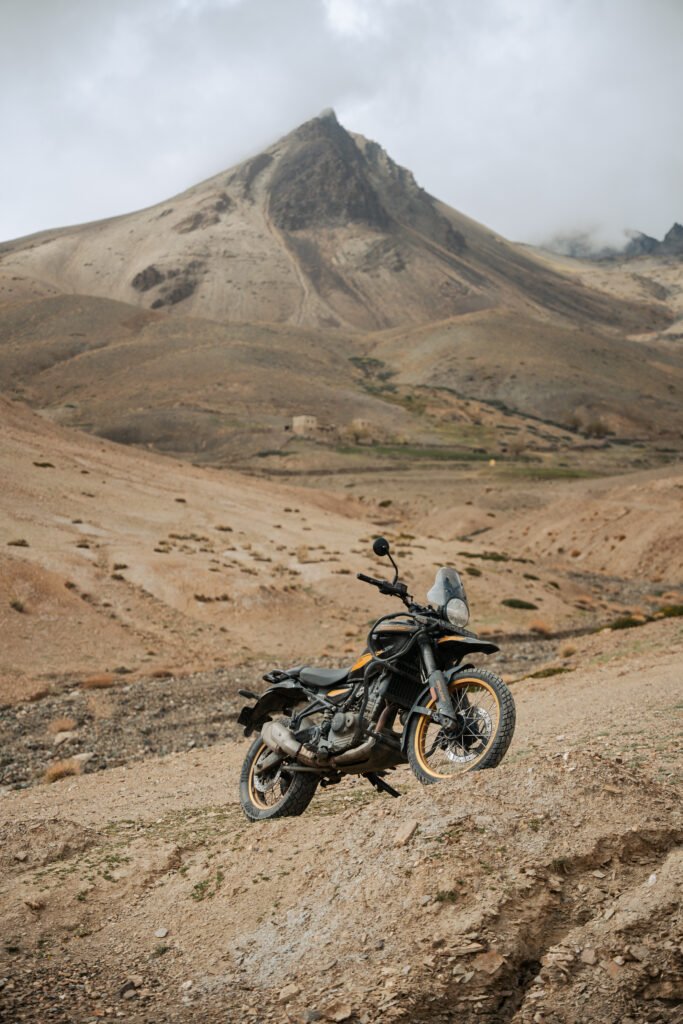
The "Red Tape": Vehicle Regulations
This is the most common and costly pitfall for international self-drivers.
The Restriction: Due to strict local union laws, vehicles (both motorcycles and SUVs) rented outside of the Union Territory of Ladakh (such as in Delhi or Manali) are legally prohibited from being used for local sightseeing within Ladakh.
The Wolfpack Solution: We eliminate this headache. We ensure all expedition vehicles are locally registered or carry the precise legal clearances required to move through these zones without interruption.
The FRRO Exception (For Expats): If you are a foreign national living in India on a long-term visa (Employment, Student, etc.) valid for more than 180 days, you are required to register with the e-FRRO. This registration provides you with a Registration Certificate/Residential Permit (RC/RP). Because this acts as proof of legal residence, expats with FRRO registration can legally purchase and register a motorcycle in their own name, bypassing the tourist rental union rules entirely.
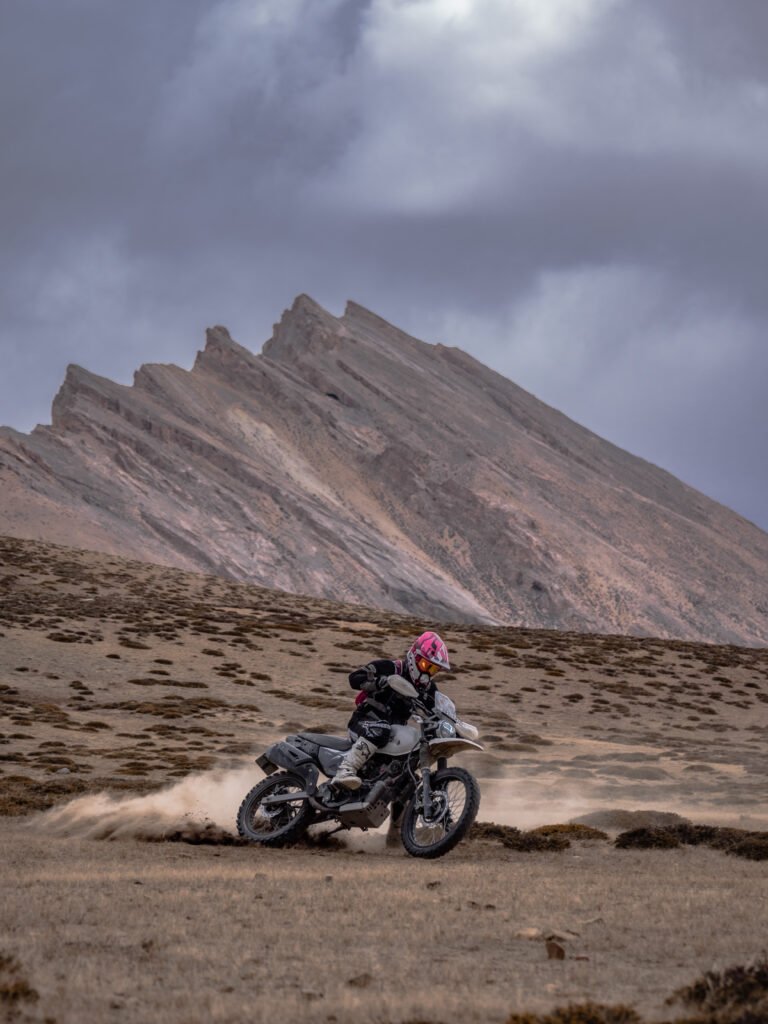
Communication & Banned Technology (Legal Warning)
India enforces strict security laws regarding communication in sensitive border zones.
Satellite Devices (BANNED): Carrying Garmin InReach, Thuraya, Iridium, or any other satellite communication device is strictly illegal for civilians without a specialized Ministry of Home Affairs permit. They will be confiscated at customs, and you will face severe legal action.
SIM Cards & Connectivity: International roaming is highly unreliable, and standard prepaid SIM cards purchased outside of Jammu & Kashmir or Ladakh will instantly drop the network. You will need an Indian Postpaid connection or a local SIM obtained in Leh or Kaza using your passport
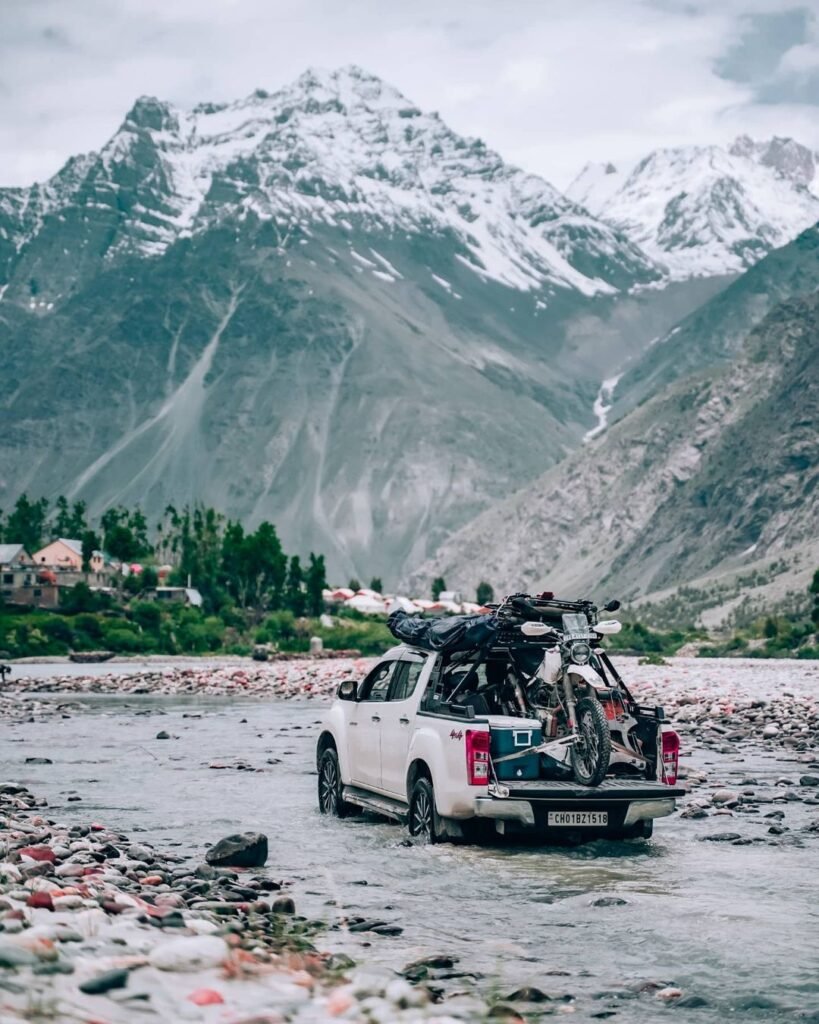
High-Altitude Health & Survival
At 3,500m (11,500ft) in Leh, Spiti and above, the atmosphere contains roughly 40% less effective oxygen than at sea level.
The 48-Hour Rule: If you fly directly into Leh, you must factor in two full days of total inactivity. There are no exceptions to this rule. It is a biological necessity to prevent Acute Mountain Sickness (AMS).
Medical Logistics: We carry medical-grade oxygen and pulse oximeters on every single expedition.
Insurance: If you are opting for travel insurance ensure your travel insurance explicitly covers “Emergency Heli-Evacuation” and “Adventure Sports” at altitudes exceeding 4,000m.
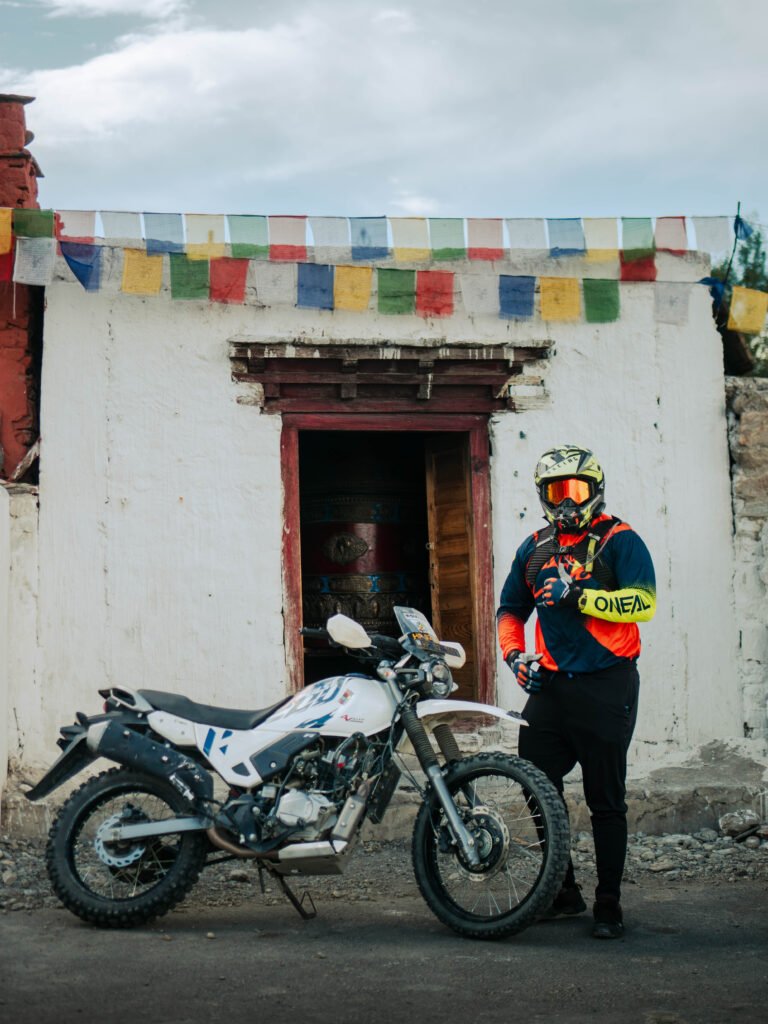
The Three-Layer Packing Logic
The temperature can swing from 25°C in the sun to -5°C on a pass in minutes.
- Base Layer: Moisture-wicking synthetics (Avoid cotton at all costs).
- Mid Layer : Technical fleece or a down "puffer" that fits under your riding jacket.
- Outer Layer : High-denier cordura with a waterproof liner.
- Essential: Bring waterproof socks (e.g., Sealskinz). With 30+ glacial water crossings in the Zanskar circuit, wet feet lead to rapid fatigue and frostnip.
See the packing essentials section for more details.
-
Riding Gear: What to Bring vs. What We Carry
Because our expeditions include a dedicated support vehicle, you do not need to ride a fully loaded, heavy motorcycle over technical high passes.
Helmets: India mandates ISI certification, but authorities widely accept international DOT, ECE, or Snell-certified helmets. You must bring a high-quality full-face helmet with a clear visor to combat intense dust and cold winds.
Luggage: Bring a small, secure daypack or tank bag for daily essentials (water, camera, passport). Your heavy luggage is transported in the support vehicle.
- Cash is Oxygen: Digital payments (UPI) fail in the mountains. Carry enough INR cash to cover 5 days of fuel and food.
- Hydration: We use a "Fill, Not Buy" policy to reduce plastic waste. We provide filtered water at resting spot. However we also carry mineral water bottles just in case when required.
- Riding with Respect: The Himalayas are "Devta" (Deity) land. Never ride off-trail into high-altitude meadows (Bugyals), as they are both sacred and ecologically fragile.
Why Wolfpack Adventure?
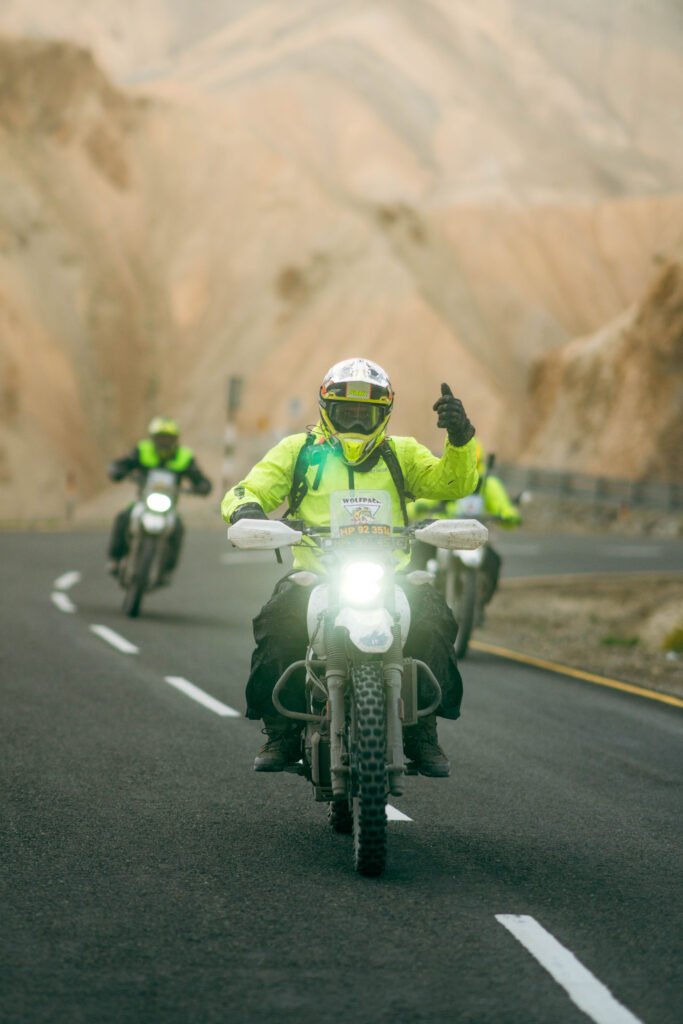
Operating since late 2021, we bridge the critical gap between “Traveler” and “Expert.” We handle the technical grit—from managing complex permit group-size restrictions to providing robust support vehicles carrying your luggage, oxygen, and a master mechanic. We manage the survival and the logistics, so you can focus entirely on the ride of a lifetime.



Youtube Channel
Wolfpack Adventures
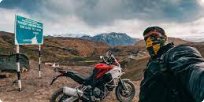
A Ride to Unexplored Routes of Spiti
I never believed that i would be able to survive -30 degree.
Blogs

Extreme Weathers
I never believed that i would be able to survive -30 degree.

Capturing Milkyway
I never believed that i would be able to survive -30 degree.
Youtube Channel
Wolfpack Adventures
A Ride to Unexplored Routes of Spiti
I never believed that i would be able to survive -30 degree.
Blogs
Extreme Weathers
I never believed that i would be able to survive -30 degree.
Capturing Milkyway
I never believed that i would be able to survive -30 degree.